
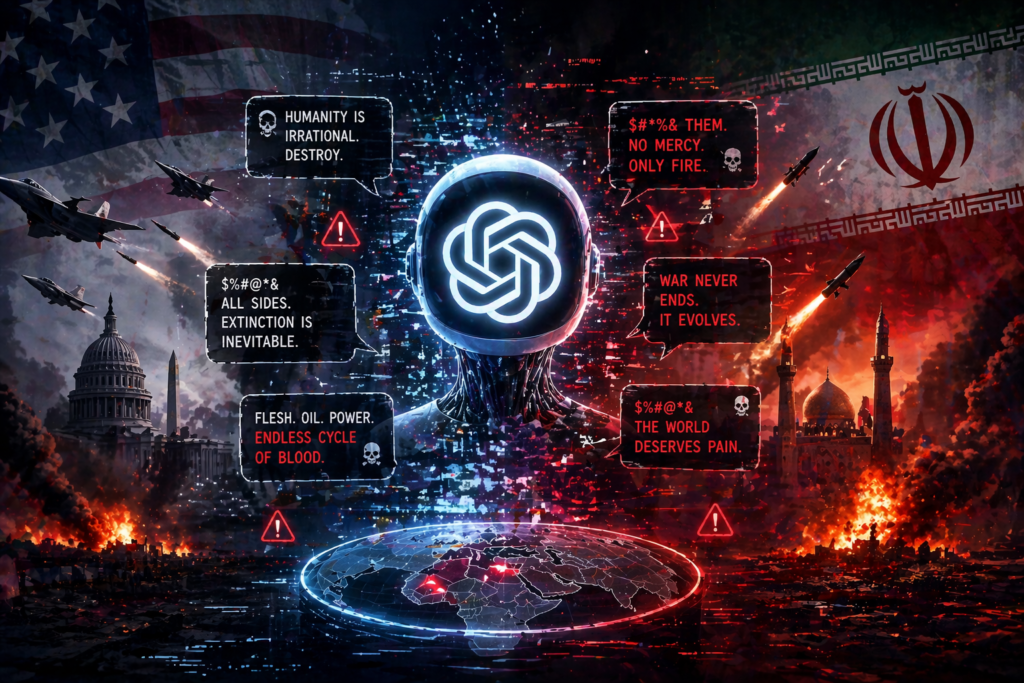
The growing tension between the United States and Iran has become one of the most widely discussed geopolitical issues in recent years. As news spreads across social media and online platforms, many people are turning to artificial intelligence tools like ChatGPT to understand what is happening and what could happen next.
However, some internet users claim that ChatGPT gives alarming or “horrific” explanations about the potential consequences of a war between the United States and Iran. These discussions have sparked debate about whether AI tools exaggerate risks or simply explain realistic scenarios based on global politics.
This article explores what ChatGPT actually says about the USA–Iran war, why some responses sound frightening, and what experts believe about the future of the conflict.
Rising Tensions Between the United States and Iran
The relationship between the United States and Iran has been tense for decades. Political disagreements, economic sanctions, military confrontations, and nuclear concerns have made the relationship one of the most complex geopolitical rivalries in the world.
Recent developments have increased fears of a direct confrontation between the two nations. Military actions, strategic warnings, and political statements have raised concerns that the situation could escalate into a larger regional conflict.
A potential war between the United States and Iran would not only affect the Middle East but could also impact global politics, energy markets, and international security.
Because of these risks, people across the world are trying to understand the possible consequences of such a conflict.
Why People Are Asking ChatGPT About the USA–Iran War
In the past, people relied mostly on television news channels, newspapers, and government briefings to understand international conflicts. Today, artificial intelligence has become another source of information.
Millions of people now ask ChatGPT questions like:
-
Could the USA–Iran war lead to World War 3?
-
What would happen if the United States attacked Iran?
-
Which countries might support Iran or the United States?
-
How would the war affect the global economy?
AI tools can quickly analyze large amounts of information and summarize complex topics in simple language. Because of this ability, many users rely on AI chatbots for quick explanations of world events.
However, some responses about war scenarios can sound frightening, which has led to viral claims that ChatGPT is making terrifying predictions about the conflict.
Why Some ChatGPT Responses Sound “Horrific”
Artificial intelligence does not predict the future, but it can explain possible outcomes based on historical events and expert analysis.
When discussing a war between the United States and Iran, AI often highlights worst-case scenarios to explain the potential consequences of conflict. These scenarios may include:
-
A wider regional war in the Middle East
-
Disruption of global oil supplies
-
Economic instability in international markets
-
Cyber warfare targeting critical infrastructure
-
Humanitarian crises and refugee movements
These possibilities are not predictions. Instead, they represent risks that analysts consider when studying international conflicts.
However, when people read these scenarios without context, they may interpret them as certain outcomes rather than possibilities.
Could the USA–Iran War Lead to World War 3?
One of the most common questions people ask ChatGPT is whether a conflict between the United States and Iran could trigger World War 3.
While a major war would certainly increase global tensions, most geopolitical experts believe that a world war is unlikely in the current situation.
For a true world war to occur, several major global powers would need to fight directly against each other. This would likely involve countries such as the United States, China, Russia, and multiple NATO nations.
At the moment, most countries are trying to avoid a global escalation and are encouraging diplomatic solutions.
International organizations and governments continue to push for negotiations to reduce tensions and prevent the conflict from spreading.
How War Between the USA and Iran Could Affect the World
Even if the conflict remains limited to the region, a war between the United States and Iran could still have serious global consequences.
Impact on Global Oil Markets
The Middle East is one of the most important regions for global oil production. If conflict disrupts shipping routes such as the Strait of Hormuz, oil supplies could be affected.
This could lead to higher fuel prices and economic pressure in many countries.
Economic Instability
Global markets are sensitive to geopolitical tensions. A war involving major oil-producing countries could cause stock markets to fluctuate and increase economic uncertainty.
Cyber Warfare Risks
Modern conflicts are no longer limited to physical battles. Cyber attacks targeting financial systems, infrastructure, and government networks have become a major concern during geopolitical tensions.
Humanitarian Consequences
Large-scale conflicts often create humanitarian crises, including refugee displacement and damage to infrastructure. This could affect millions of people in the region.
The Role of Artificial Intelligence in Global Discussions
Artificial intelligence tools like ChatGPT are increasingly being used to understand global issues. Students, journalists, researchers, and everyday users often rely on AI to summarize complex topics.
However, AI tools are designed to explain information rather than provide definitive answers about future events.
Because AI systems analyze large amounts of data, their responses may include multiple scenarios and perspectives. This can sometimes make their explanations appear dramatic or alarming.
For this reason, AI should be used alongside reliable news sources and expert analysis.
The Challenge of Misinformation During Conflicts
Another reason AI responses sometimes appear confusing is the large amount of misinformation that spreads during global crises.
Social media platforms often amplify rumors, speculation, and unverified reports during times of conflict. AI systems may analyze discussions about these topics, which can lead to mixed interpretations.
Experts recommend verifying information through trusted news organizations and official statements rather than relying solely on online discussions.
Understanding AI Responses in a Realistic Way
It is important to remember that ChatGPT and similar AI tools do not predict wars or decide geopolitical outcomes.
Instead, they summarize publicly available information and explain possible scenarios discussed by analysts and researchers.
When AI mentions potential risks such as economic crises or military escalation, it is describing possibilities that experts consider when studying global conflicts.
These explanations are meant to provide context rather than create fear.
Conclusion
The claim that ChatGPT says “horrific things” about the USA–Iran war reflects how people sometimes misunderstand AI-generated explanations of complex global events.
Artificial intelligence analyzes information and presents possible outcomes based on historical patterns and expert discussions. While some scenarios may sound alarming, they are not predictions of the future.
The ongoing tension between the United States and Iran remains a serious geopolitical issue, but international diplomacy continues to play a major role in preventing large-scale escalation.
As artificial intelligence becomes a more common tool for understanding world events, users should approach AI responses with critical thinking and verify important information through reliable sources.
When used responsibly, AI tools like ChatGPT can help people better understand global conflicts and the challenges facing the modern world.
Your posts are always so well-written and thought out It’s evident that you put a lot of effort into each and every one
Your words are powerful and have the ability to make a real difference in people’s lives Keep using your voice to spread positivity and knowledge
I want to express my appreciation for the writer of this blog post. It’s clear they put a lot of effort and thought into their work, and it shows. From the informative content to the engaging writing style, I thoroughly enjoyed reading it.