
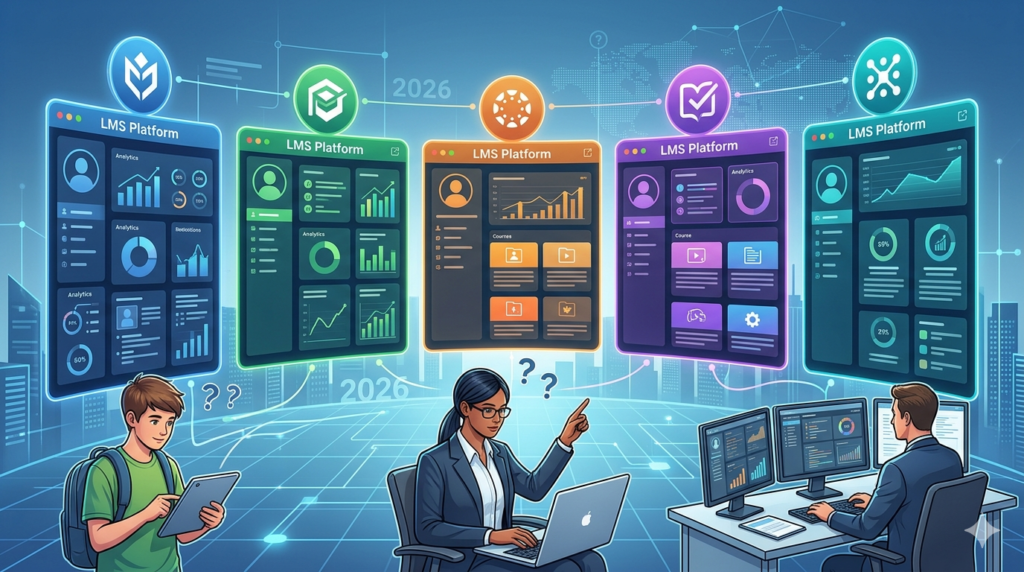
In 2026, Learning Management Systems (LMS) continue to power digital learning in corporations, universities, nonprofits, and online course businesses. As the LMS landscape evolves with AI, analytics, and adaptive learning capabilities, choosing the right platform has become both more important and more complex.
In this comprehensive guide, we explore the top 5 LMS platforms for 2026, compare their strengths, and help you decide which one fits your learning goals — whether you’re building internal training, selling online courses, or managing an academic program.
What Is an LMS? (Quick Overview)
Before we dive in, let’s clarify what an LMS is.
A Learning Management System (LMS) is software that creates, manages, delivers, and tracks educational or training content online. It provides tools for course building, learner enrollment, assessments, progress analytics, and often integrates with external tools such as content libraries, HR systems, or video conferencing apps.
As e-learning grows, LMS platforms increasingly include advanced capabilities like AI recommendations, adaptive learning paths, automation, and mobile access — making the right choice more impactful than ever.
What We Looked For in Top LMS Platforms
To identify the best LMS platforms, we focused on key criteria that matter in 2026:
-
Ease of use for admins and learners
-
AI and personalization features
-
Scalability for large user bases
-
Course creation and assessment tools
-
Analytics and reporting capabilities
-
Integrations with third-party systems
-
Pricing and deployment flexibility
These factors help align LMS platforms with real-world business, education, and creator needs.
1. Moodle – Best Open-Source & Flexible LMS
✔ Best for: Educational institutions, open-source advocates
⭐ Overview
Moodle is the most widely adopted open-source LMS worldwide, thanks to its flexibility, strong community support, and vast plugin ecosystem. Institutions and organizations that want full control and customization often choose Moodle because it can be self-hosted or cloud-hosted via Moodle Certified Service Providers.
🧠 Key Features
-
Highly customizable with third-party plugins
-
Multilingual support and mobile responsiveness
-
Extensive assessment and grading tools
-
No licensing cost (open source)
⚠ Considerations
-
Requires technical expertise to set up and maintain
-
Interface can feel dated for some
Best Fit: Universities, schools, and organizations with developers or IT support who want control without high licensing fees.
SEO Tip: When targeting keywords like “best open-source LMS” and “customizable LMS platform”, Moodle consistently ranks high because of its flexibility and global community.
2. Docebo – Enterprise-Ready & AI-Driven LMS
✔ Best for: Large enterprises and complex corporate training
⭐ Overview
Docebo has emerged as a leader in AI-powered LMS solutions, especially for businesses that want personalized learning paths and advanced learner analytics. Its AI tools auto-tag content and recommend learning resources based on learner behavior, which enhances engagement and outcomes.
🧠 Key Features
-
AI-powered recommendations and custom learning tracks
-
Integration with major business tools like Salesforce
-
Social learning and robust analytics dashboard
-
Mobile app and offline access
⚠ Considerations
-
Pricing is quote-based (not transparent upfront)
-
More complex admin setup than smaller systems
Best Fit: Enterprises with large learner populations and sophisticated training requirements that benefit from automation and scalable solutions.
3. Canvas LMS – Best for Academic Collaboration
✔ Best for: Higher education and K-12 environments
⭐ Overview
Canvas LMS (by Instructure) has gained popularity in academic settings for its clean UI, strong integration ecosystem, and collaboration tools. Canvas offers features such as customizable grade books, SpeedGrader, and seamless integration with tools like Google Workspace and Microsoft Teams.
🧠 Key Features
-
User-friendly interface for instructors and students
-
Integration with educational tools and apps
-
Powerful assessment and grading workflows
-
Free tier available for teachers
⚠ Considerations
-
Some features for advanced corporate training are limited
Best Fit: Universities and schools looking for intuitive, integration-friendly LMS features.
4. TalentLMS – Easiest to Use for SMBs
✔ Best for: Small to mid-sized businesses and teams
⭐ Overview
TalentLMS strikes a balance between power and simplicity. It’s an affordable, cloud-based platform that enables teams to set up training quickly, provide gamification elements such as badges and leaderboards, and launch content without steep learning curves.
🧠 Key Features
-
Free plan available for small teams
-
Drag-and-drop course building
-
Gamification and mobile support
-
Basic analytics and reporting
⚠ Considerations
-
Reporting tools aren’t as advanced as enterprise systems
Best Fit: Startups, small businesses, and teams that need quick deployment without heavy IT support.
5. Absorb LMS – Scalable & Support-Focused Platform
✔ Best for: Mid-market to enterprise with strong support needs
⭐ Overview
Absorb LMS combines an intuitive user experience with powerful enterprise-level features including multi-portal deployment, automation rules, and e-commerce support. It also stands out for its implementation support and customer service, which clients often rate highly.
🧠 Key Features
-
Multi-portal architecture with branded learner portals
-
Automation for enrollments and reminders
-
Deep learning analytics and reporting
-
Built-in e-commerce
⚠ Considerations
-
Not the cheapest option on the market
Best Fit: Mid-sized companies and organizations that need scalable training with strong support.
How to Choose the Best LMS for You
Choosing the best Learning Management System depends on your unique priorities and context. Here’s how to match needs with platforms:
For Universities & Schools
-
Look for collaboration tools, grading, and classroom integration
-
Canvas and Moodle are top picks here
For Large Enterprises
-
Prioritize AI features, automation, and robust analytics
-
Docebo and Absorb shine in this category
For Small Businesses
-
Ease of use, predictable pricing, and basic reporting matter
-
TalentLMS is a strong candidate
For Course Creators & Entrepreneurs
Watch for platforms with course selling, checkout options, and learner communities. While not in our top 5, platforms like Thinkific or LearnWorlds may fit creators better, depending on monetization needs.
Key LMS Features to Prioritize in 2026
As LMS technology evolves, some features make a significant difference:
1. AI and Personalization
Advanced AI that creates adaptive learning paths, suggests relevant modules, and predicts learner engagement will be standard in top systems.
2. Mobile & Offline Learning
Learners increasingly want access on the go. Mobile support and offline capabilities improve completion rates and engagement.
3. Analytics & Reporting
Real-time dashboards help training managers and educators measure outcomes and refine content.
4. Integration Ecosystem
Seamless integration with calendars, HR systems, CRM tools, video platforms, and communication apps makes LMS adoption smoother.
5. Content Authoring Tools
Built-in or integrated authoring tools streamline course creation, especially for teams without dedicated instructional designers.
Conclusion: Which LMS Fits You Best?
There’s no one size fits all when it comes to learning management systems. What matters most is aligning an LMS with your learning goals, audience size, skill level, and budget.
Here’s a quick recap:
| LMS Platform | Best For | Strength |
|---|---|---|
| Moodle | Educational institutions | Ultimate customization, open source |
| Docebo | Large enterprises | AI-driven personalization |
| Canvas | Schools & colleges | Collaboration and integrations |
| TalentLMS | Small teams | Ease of use and affordability |
| Absorb LMS | Mid to large orgs | Scalable and support-rich |
By identifying your needs first — whether that’s robust enterprise analytics, simple course creation, or flexible open-source control — you can choose the best LMS that grows with you in 2026 and beyond.