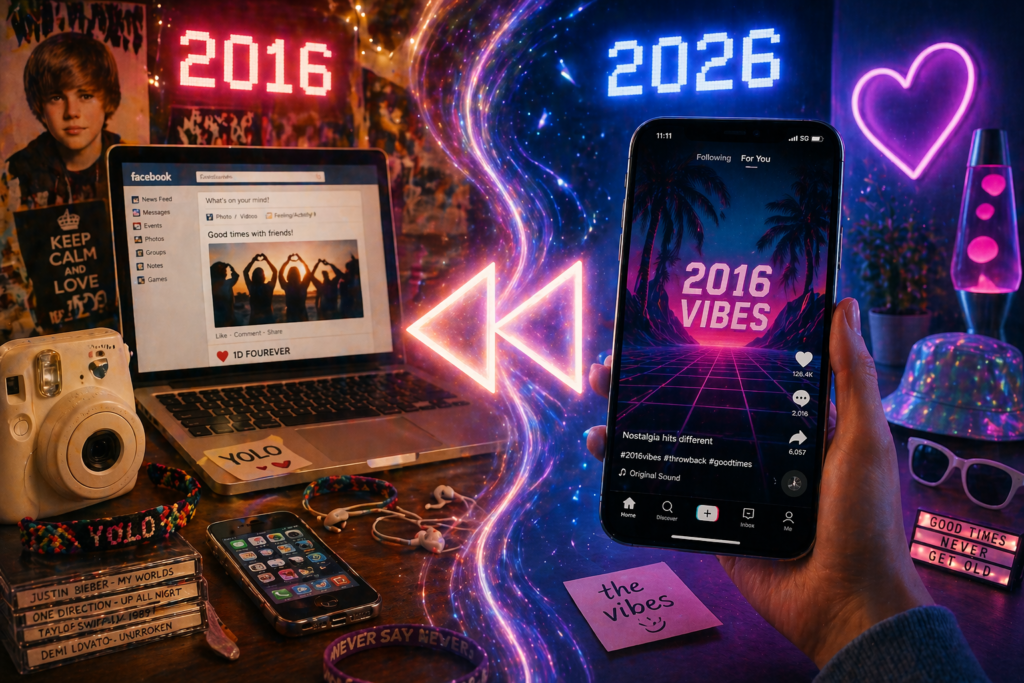
If you’ve been scrolling social media lately and felt a weird sense of déjà vu—don’t panic, you’re not glitching. The internet is collectively revisiting its past, and the verdict is in: 2026 is officially the new 2016.
From throwback filters and Vine-style humor to Tumblr-coded aesthetics and pop culture revivals, nostalgia is having a full-blown comeback moment. But this trend isn’t just about aesthetics—it’s deeply tied to how people are feeling, behaving, and consuming content today.
So why is 2016 suddenly everywhere again? And why is this nostalgia trend exploding right now? Let’s break it down.
What Does “2026 Is the New 2016” Actually Mean?
The phrase “2026 is the new 2016” refers to a cultural and digital trend where people are recreating, celebrating, and romanticizing the internet culture of 2016—a year many associate with simplicity, creativity, and peak online fun.
This includes:
-
2016-style memes and humor
-
Low-effort, chaotic social media content
-
Vintage Instagram filters
-
Throwback fashion and music
-
Revival of old platforms, formats, and vibes
In short, people are craving the energy of a time when the internet felt less polished and more human.
Why 2016 Feels Like “The Good Old Internet”
1. A Time Before Burnout Culture
For many users, 2016 represents a pre-burnout era—before constant algorithm pressure, hustle culture, and hyper-curated personal brands.
Back then:
-
Content felt more spontaneous
-
Virality was accidental, not engineered
-
Online spaces felt playful, not performative
In contrast, today’s hyper-optimized content ecosystem makes 2016 feel refreshingly authentic.
2. Emotional Comfort in Uncertain Times
Nostalgia thrives during uncertainty, and let’s be real—recent years have been a lot.
Economic pressure, global instability, and digital overload have pushed people to seek emotional safety. Revisiting a familiar cultural moment provides comfort, stability, and a sense of control.
Nostalgia isn’t just a trend—it’s a coping mechanism.
How the “New 2016” Trend Shows Up Online
1. Social Media Aesthetics Making a Comeback
Platforms like TikTok and Instagram are flooded with:
-
Grainy filters
-
Oversaturated colors
-
Low-resolution visuals
-
Casual, unedited videos
Creators are intentionally rejecting perfection in favor of messy, relatable vibes—the exact opposite of influencer-era polish.
2. Meme Culture Going Back to Chaos
2016 memes were random, absurd, and unhinged in the best way. That chaotic humor is back.
Instead of overly branded or forced viral content, people are sharing:
-
Inside jokes
-
Anti-aesthetic memes
-
“This makes no sense but it’s funny” humor
It’s unserious content for a serious world.
3. Music, Fashion, and Pop Culture Revival
Nostalgia doesn’t stop at memes.
We’re seeing:
-
Pop-punk and early EDM influences return
-
Fashion trends like chokers, oversized hoodies, ripped jeans
-
Renewed love for artists and sounds popular in the mid-2010s
Even brands are leaning into throwback campaigns to tap into emotional memory.
Why This Trend Is Blowing Up in 2026 Specifically
Algorithm Fatigue Is Real
Audiences are exhausted by:
-
Over-produced content
-
Sales-driven creators
-
AI-generated sameness
2016-style content feels human again—and humans crave human things.
Younger Gen Z Is Discovering “Old Internet” for the First Time
For younger users, 2016 culture isn’t nostalgia—it’s discovery.
They’re exploring:
-
Vine compilations
-
Tumblr aesthetics
-
Early YouTube humor
This cross-generation interaction fuels the trend even further.
The Psychology Behind Nostalgia Trends
Nostalgia increases feelings of:
-
Belonging
-
Optimism
-
Emotional warmth
Psychologically, it helps people reconnect with identity and happier memories. That’s why nostalgic content performs so well—it doesn’t just entertain, it comforts.
From a content strategy perspective, nostalgia is emotional marketing at its finest.
How Brands and Creators Are Using the Trend
1. Throwback Campaigns That Feel Authentic
Smart brands aren’t just slapping a “retro” filter on ads. They’re:
-
Reviving old slogans
-
Recreating classic designs
-
Speaking in a more casual, internet-native tone
Authenticity is key—forced nostalgia backfires fast.
2. Content Creators Embracing Imperfection
Creators leaning into the trend are:
-
Posting unpolished content
-
Sharing older formats
-
Being less scripted and more real
Ironically, going backward is helping creators grow forward.
SEO & Marketing Impact of the Nostalgia Trend
From an SEO perspective, nostalgia trends are gold.
High-performing keywords include:
-
“2026 is the new 2016”
-
“internet nostalgia trend”
-
“2016 aesthetic comeback”
-
“why nostalgia is trending”
Content that blends trend analysis + emotional storytelling tends to rank well and stay relevant longer.
Is This Just a Phase—or a Cultural Shift?
Here’s the hot take:
This isn’t just a phase. It’s a reaction.
People aren’t rejecting progress—they’re rejecting pressure.
The “new 2016” trend signals a broader desire for:
-
Slower content
-
Less performance
-
More joy
Whether the aesthetic lasts or not, the mindset shift is real.
What This Trend Says About the Future of the Internet
The rise of nostalgia suggests the future internet may be:
-
Less polished
-
More community-driven
-
Emotionally resonant
-
Focused on shared experiences over metrics
And honestly? That’s kind of refreshing.
Final Thoughts
The “2026 is the new 2016” nostalgia trend isn’t about escaping the present—it’s about reclaiming joy from the past to survive the future.
In a digital world obsessed with growth, optimization, and perfection, people are choosing comfort, chaos, and connection instead.
And if that means blurry filters, weird memes, and throwback vibes… honestly, we’re here for it.