
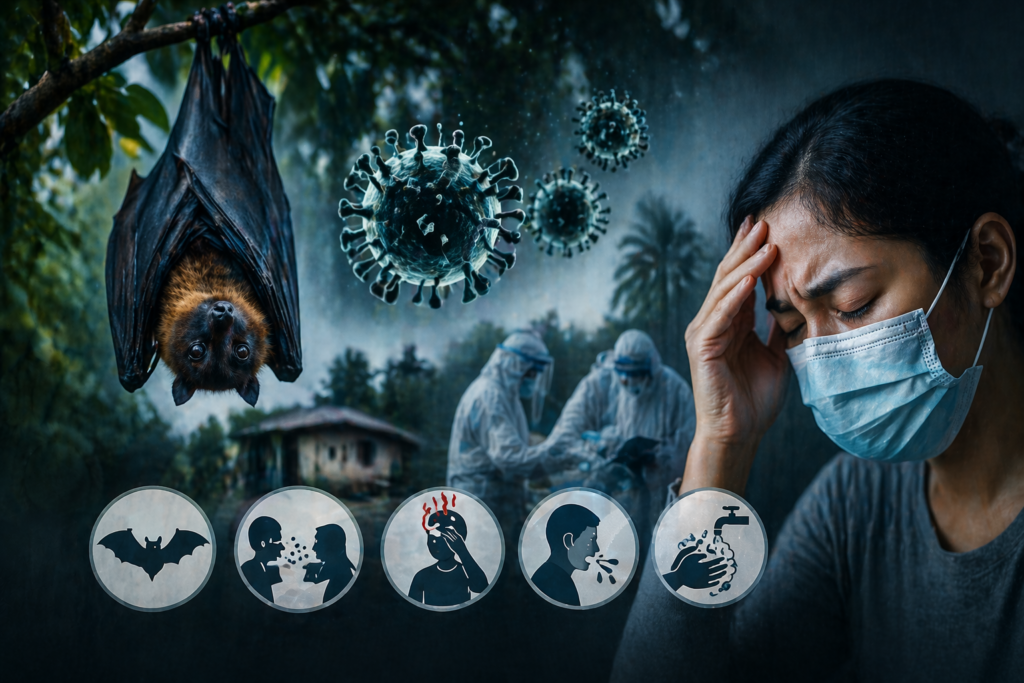
The Nipah virus is one of those names that instantly triggers concern—and for good reason. It’s a rare but deadly zoonotic virus that has caused multiple outbreaks across South and Southeast Asia, often with high fatality rates. While it doesn’t spread as easily as some other viruses, its severity makes awareness and prevention absolutely critical.
In this blog, we’ll break down what the Nipah virus is, how it spreads, its symptoms, diagnosis, treatment options, and prevention strategies, all in a clear and easy-to-understand way.
What Is the Nipah Virus?
The Nipah virus (NiV) is a zoonotic virus, meaning it spreads from animals to humans. It belongs to the Paramyxoviridae family and was first identified in 1998–1999 during an outbreak in Malaysia.
Nipah virus infection can cause:
-
Severe respiratory illness
-
Acute encephalitis (inflammation of the brain)
-
High mortality rates, ranging from 40% to 75% in reported outbreaks
Because of its severity and lack of a specific cure, the World Health Organization (WHO) classifies Nipah virus as a priority disease.
Where Did Nipah Virus Originate?
The virus was first detected among pig farmers in Malaysia. Later investigations found that fruit bats (Pteropus species)—also known as flying foxes—are the natural hosts of the Nipah virus.
Since then, outbreaks have been reported in:
-
Bangladesh
-
India (notably Kerala)
-
Malaysia
-
Singapore
These outbreaks are usually localized, but they raise serious public health concerns.
How Does Nipah Virus Spread?
Understanding transmission is key to prevention.
1. Animal-to-Human Transmission
Humans can get infected through:
-
Direct contact with infected bats
-
Consuming fruits or raw date palm sap contaminated by bat saliva or urine
-
Contact with infected animals such as pigs
2. Human-to-Human Transmission
Nipah virus can spread between people through:
-
Close physical contact
-
Exposure to bodily fluids (saliva, blood, respiratory droplets)
-
Caring for infected patients without proper protective measures
This type of transmission has been documented in healthcare settings and family clusters.
Symptoms of Nipah Virus Infection
Symptoms usually appear 4 to 14 days after exposure, but in some cases, the incubation period can be longer.
Early Symptoms
-
Fever
-
Headache
-
Muscle pain
-
Sore throat
-
Vomiting
Severe Symptoms
-
Dizziness
-
Altered mental state
-
Seizures
-
Difficulty breathing
-
Acute encephalitis
-
Coma
The disease can progress rapidly, making early detection crucial.
Why Is Nipah Virus So Dangerous?
The danger of Nipah virus lies in:
-
High fatality rate
-
Severe neurological complications
-
Lack of specific antiviral treatment
-
Potential for person-to-person spread
Some survivors may experience long-term neurological effects, and in rare cases, relapse or late-onset encephalitis has been reported months or years later.
How Is Nipah Virus Diagnosed?
Diagnosis is usually done in specialized laboratories using:
-
Real-time polymerase chain reaction (RT-PCR)
-
Enzyme-linked immunosorbent assay (ELISA)
-
Virus isolation and neutralization tests
Because symptoms can resemble other viral infections, laboratory confirmation is essential.
Is There a Treatment for Nipah Virus?
Currently, there is no specific antiviral drug or vaccine approved for Nipah virus infection.
Supportive Care Is the Main Approach
Treatment focuses on:
-
Managing symptoms
-
Supporting breathing and hydration
-
Treating complications like encephalitis
Experimental treatments and vaccines are under research, but as of now, prevention remains the most effective defense.
Prevention and Control Measures
Prevention plays a huge role in controlling Nipah virus outbreaks.
1. Avoid Consumption of Contaminated Food
-
Do not consume raw date palm sap
-
Wash fruits thoroughly and avoid partially eaten fruits
2. Reduce Animal Exposure
-
Avoid contact with sick animals
-
Use protective gear when handling animals in outbreak-prone areas
3. Practice Infection Control
-
Use personal protective equipment (PPE) when caring for patients
-
Follow strict hygiene and sanitation protocols in healthcare settings
4. Community Awareness
Educating communities about transmission risks significantly reduces outbreak chances.
Nipah Virus vs Other Viral Diseases
Unlike highly contagious respiratory viruses, Nipah virus:
-
Spreads through close contact, not airborne transmission
-
Causes more severe neurological symptoms
-
Has fewer total cases but higher fatality rates
This makes it less widespread but more lethal.
Global Health Concerns and Preparedness
Due to climate change, deforestation, and increased human-animal interaction, zoonotic diseases like Nipah virus are becoming more common.
Global health organizations are focusing on:
-
Surveillance systems
-
Early outbreak detection
-
Research and vaccine development
-
Public health preparedness
Preparedness is key to preventing future epidemics.
Common Myths About Nipah Virus
Myth 1: Nipah Virus Spreads Easily Like Flu
False. It requires close contact.
Myth 2: Only Rural Areas Are at Risk
False. Healthcare settings and urban areas can also be affected.
Myth 3: There Is a Cure Available
False. Treatment is supportive, not curative.
Accurate information prevents unnecessary panic.
What Should You Do If You Suspect Infection?
If someone shows symptoms and has a possible exposure history:
-
Seek medical attention immediately
-
Isolate the patient
-
Inform healthcare providers about exposure history
Early action saves lives.
Final Thoughts
The Nipah virus is rare, but when it appears, it demands serious attention. Awareness, early detection, and strong preventive measures are currently our best tools against it.
Staying informed—not fearful—is the smartest response. With responsible public health practices, community education, and ongoing research, the risk of widespread outbreaks can be effectively managed.
Knowledge is protection.
Faleminderit për ndarjen, shumë e dobishme.