
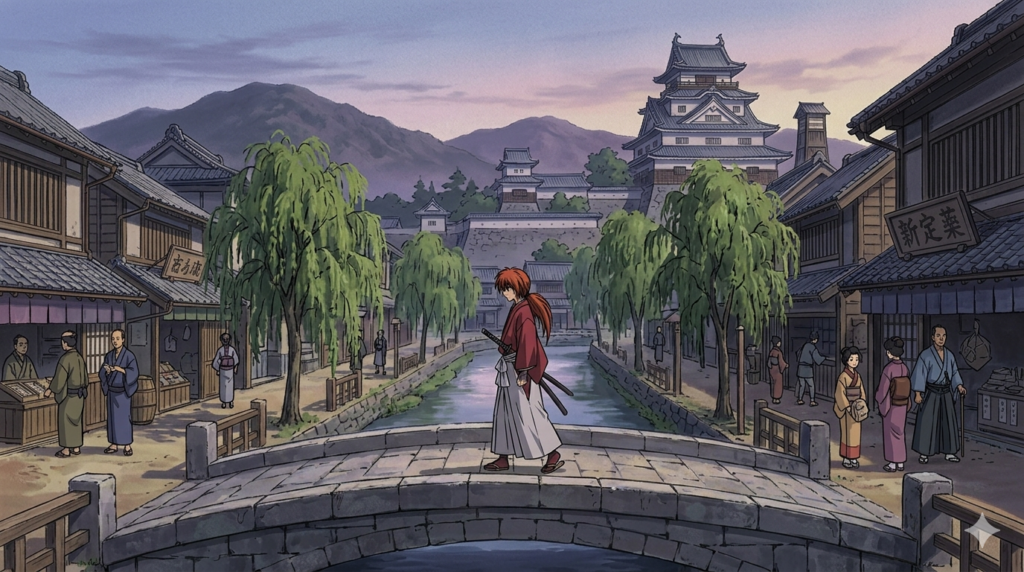
There’s something about ‘90s anime that just hits different. The animation had soul, the pacing had patience, and when an anime was set in a historical or culturally rooted Japan, it didn’t just reference the era—it lived in it.
Before ultra-glossy digital effects took over, these shows used hand-drawn art, traditional music cues, and quiet storytelling to immerse us in Japan’s past. Whether it was the Edo period, Meiji Restoration, or rural post-war Japan, these anime felt authentic, grounded, and deeply respectful of Japanese culture.
So if you’re craving anime that feels like stepping into an old Japanese painting or flipping through a history scroll, here are the Top 10 ‘90s Anime with Authentic Japanese Period Vibes—ranked by atmosphere, cultural depth, and straight-up emotional damage.
1. Rurouni Kenshin (1996)
Let’s get the obvious king out of the way first 👑
Set during the Meiji era, Rurouni Kenshin perfectly captures a Japan caught between tradition and modernization. Samurai are becoming obsolete, swords are being outlawed, and the country is figuring out what it even means to move forward.
Kenshin himself is a walking symbol of this transition—an ex-assassin trying to live peacefully in a changing world. The clothing, the architecture, the social conflicts, even the street layouts feel historically grounded. It’s not just a samurai anime; it’s a reflection on Japan’s identity crisis during a pivotal era.
Authenticity level: Elite
2. Princess Mononoke (1997)
Studio Ghibli didn’t just make movies—they made cultural artifacts.
Princess Mononoke is set in Japan’s Muromachi period, and it explores the clash between nature, tradition, and industrialization. The forests feel ancient, the gods feel terrifyingly old, and the human settlements feel rooted in real historical struggles.
What makes it special is how Miyazaki weaves Shinto beliefs, folklore, and environmental themes into the story without over-explaining anything. It trusts the audience to feel the culture rather than be lectured about it.
This is Japanese mythology in its rawest, most poetic form.
3. Samurai X: Trust & Betrayal (1999)
If Rurouni Kenshin was hopeful, Trust & Betrayal was heartbreak in HD (well… ‘90s HD).
This OVA dives deep into Kenshin’s past during the Bakumatsu period, and the tone is brutally realistic. No flashy heroics. Just snow-covered streets, political assassinations, and the emotional weight of violence.
The pacing is slow, the dialogue is minimal, and the silence speaks louder than words. It feels less like anime and more like a historical Japanese film—because that’s exactly what it’s trying to be.
Warning: You will not be okay afterward.
4. Only Yesterday (1991)
Not every period anime needs swords.
Only Yesterday is set in post-war Japan, switching between Taeko’s adult life and her childhood memories from the 1960s. What makes it incredible is how painfully real it feels.
School lunches, family expectations, rural life, gender roles—everything is portrayed with quiet honesty. This is the kind of anime that makes you realize culture isn’t just history books; it’s everyday life.
It captures a Japan that was rebuilding, dreaming, and slowly changing—one memory at a time.
5. Grave of the Fireflies (1988 – honorary ‘90s vibes)
Yes, it technically came out in the late ‘80s, but emotionally? It lives rent-free in the ‘90s anime trauma hall of fame.
Set during World War II, this film doesn’t romanticize anything. It shows war from the perspective of two children trying to survive in a collapsing Japan.
The food shortages, air raids, social breakdown, and cultural shame are depicted with brutal honesty. It’s one of the most authentic portrayals of wartime Japan ever animated—and also one of the most devastating.
You don’t watch this movie.
You endure it.
6. Ninja Scroll (1993)
Now for something darker—and way more unhinged.
Ninja Scroll is set in feudal Japan and leans heavily into folklore, superstition, and myth. While it’s exaggerated and violent, the world-building is steeped in traditional Japanese legends, from demon-like warriors to secret clans.
The landscapes, costumes, and political backdrop reflect a chaotic Japan where power was fragmented and danger lurked everywhere. It’s not historically “clean,” but culturally? It knows exactly what it’s doing.
Think: folklore meets grindhouse cinema.
7. Heike Monogatari (1994 OVA)
Based on the classic Japanese epic The Tale of the Heike, this anime is as close as you’ll get to animated literature from Japan’s past.
It depicts the Genpei War and the fall of the Taira clan with poetic narration and a strong sense of Buddhist impermanence—a core theme in Japanese philosophy.
This isn’t action-heavy or flashy. It’s slow, reflective, and tragic, just like the original text. If you care about authenticity over entertainment, this one’s a hidden gem.
8. Inuyasha (1999)
Yes, it’s a fantasy. Yes, it has modern elements. But hear me out.
Large portions of Inuyasha take place in Sengoku-era Japan, and the show does a great job portraying rural villages, shrines, feudal hierarchies, and everyday life of the era—even with demons running around.
The blend of folklore, Shinto beliefs, and historical settings gives it a strong period vibe, especially compared to many later fantasy anime that feel culturally vague.
Plus, the background art? Straight-up wallpaper-worthy.
9. My Neighbors the Yamadas (1999)
This one’s sneaky.
At first glance, it looks simple—even goofy. But My Neighbors the Yamadas is a slice-of-life love letter to traditional Japanese family dynamics.
The humor, generational gaps, social expectations, and everyday rituals are deeply rooted in Japanese culture. It doesn’t focus on a historical era per se, but it preserves a way of life that feels increasingly rare.
It’s like watching a cultural time capsule disguised as comedy.
10. Pom Poko (1994)
Rounding out the list with chaos and folklore energy 🦝
Pom Poko revolves around tanuki (mythical raccoon dogs) fighting against urban development. Beneath the absurd humor is a deeply Japanese story about land, tradition, and spiritual loss.
The film references old folktales, shapeshifting myths, and rural customs while commenting on Japan’s rapid modernization in the late 20th century.
It’s weird. It’s bold. It’s unmistakably Japanese.
Final Thoughts: Why ‘90s Period Anime Felt More Real
Here’s my hot take 🔥
‘90s anime didn’t rush.
They let scenes breathe. They respected silence. They trusted viewers to understand context without being spoon-fed explanations. And because of that, when they tackled Japanese history or culture, it felt earned, not aesthetic.
Modern anime is stunning, no doubt. But if you want authenticity—if you want to feel Japan’s past rather than just see it—the ‘90s did it best.
So light a candle, put on some traditional music, and dive back into these classics. Your soul will thank you.