
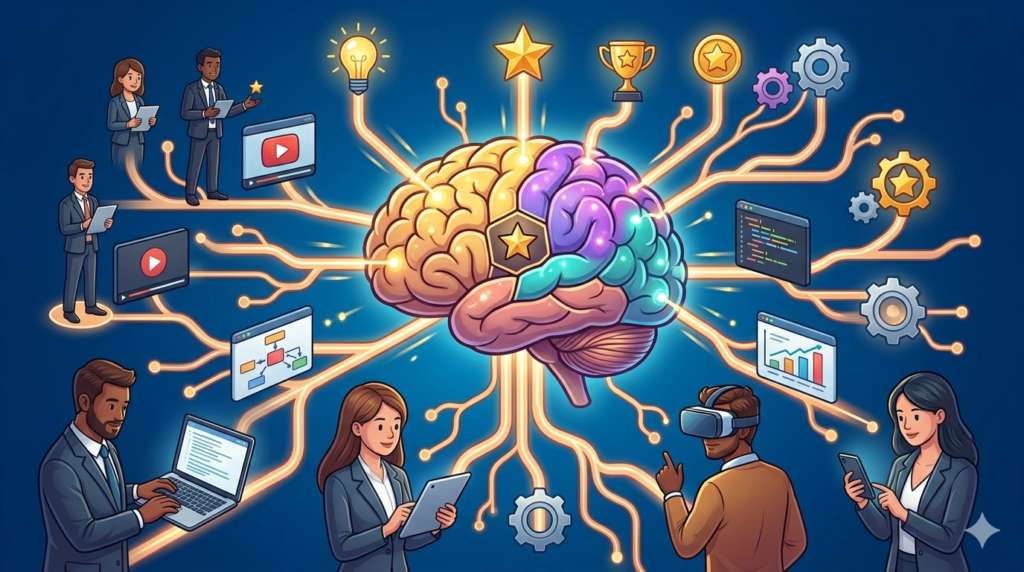
In a world where attention spans are shrinking and information overload is real, traditional learning methods are struggling to keep up. Long training sessions, hour-long videos, and dense manuals often result in one thing: learners forgetting most of what they just learned.
This is where microlearning comes in.
Microlearning is quickly becoming the go-to strategy for organizations, educators, and online course creators who want better knowledge retention, higher engagement, and faster learning outcomes. And honestly? It works.
In this blog, we’ll break down what microlearning is, why it’s so effective, and how it improves knowledge retention—without turning this into an academic snoozefest.
What Is Microlearning?
Microlearning is a learning approach that delivers content in small, focused, bite-sized units, each designed to teach one specific concept or skill.
Instead of:
-
One 60-minute training session
You get:
-
5–10 minute lessons
-
Short videos
-
Quick quizzes
-
Single-topic modules
Each piece of content has one clear objective. No fluff. No overload.
Why Traditional Learning Fails at Knowledge Retention
Before we hype microlearning, let’s talk about the problem.
Studies consistently show that learners forget:
-
Up to 70% of information within 24 hours
-
Nearly 90% within a week—if it’s not reinforced
Traditional learning fails because:
-
Too much information is delivered at once
-
Learners are passive, not active
-
Content isn’t immediately applicable
-
Attention drops quickly
This phenomenon is known as cognitive overload—and it’s the enemy of retention.
How Microlearning Improves Knowledge Retention
Microlearning works because it aligns with how the brain actually learns.
Here’s why it’s so effective:
1. Reduces Cognitive Overload
Small chunks of content are easier for the brain to process and store. Learners focus on one idea at a time, which improves comprehension and recall.
2. Encourages Repetition
Microlearning makes it easy to revisit content. Repetition strengthens memory pathways, leading to long-term retention.
3. Supports Just-in-Time Learning
Learners can access information exactly when they need it, which makes learning more relevant and memorable.
The Science Behind Microlearning
Microlearning is backed by cognitive science, not trends.
It leverages:
-
The spacing effect – learning spread over time is retained better
-
Active recall – short quizzes and prompts improve memory
-
Focused attention – short lessons maintain engagement
By working with the brain instead of against it, microlearning creates stronger learning outcomes.
Microlearning vs. Traditional Learning
Let’s compare them real quick:
| Traditional Learning | Microlearning |
|---|---|
| Long sessions | Short, focused lessons |
| Information overload | One concept at a time |
| Low engagement | High engagement |
| Hard to revisit | Easy to repeat |
| Passive learning | Active learning |
This is why microlearning consistently outperforms traditional training when it comes to knowledge retention and learner engagement.
Why Microlearning Works for Modern Learners
Modern learners are busy. Distracted. Multitasking.
Microlearning fits perfectly into their lives because it:
-
Works on mobile devices
-
Fits into short breaks
-
Doesn’t require long time commitments
-
Feels achievable, not overwhelming
Instead of forcing learners to “find time,” microlearning meets them where they already are.
Microlearning in Corporate Training
Corporate training is one of the biggest winners when it comes to microlearning.
Organizations use microlearning for:
-
Employee onboarding
-
Compliance training
-
Product knowledge
-
Sales enablement
-
Skill refreshers
Why it works:
-
Employees can learn without disrupting work
-
Training is consistent across teams
-
Knowledge is applied immediately
Result? Better performance, fewer errors, and higher productivity.
Microlearning for Online Courses and eLearning
Online course creators love microlearning—and for good reason.
Microlearning helps:
-
Increase course completion rates
-
Reduce learner drop-off
-
Improve satisfaction
-
Make content easier to update
Instead of one massive course, creators can build modular learning paths that learners can complete step by step.
Examples of Effective Microlearning Content
Microlearning isn’t limited to one format. Some popular examples include:
-
5-minute explainer videos
-
One-page guides or infographics
-
Flashcards
-
Scenario-based questions
-
Quick quizzes
-
Short podcasts
-
Interactive simulations
The format matters less than the focus. One goal per lesson—that’s the rule.
How to Design Effective Microlearning Content
Creating microlearning content doesn’t require advanced tools or tech skills.
Follow these best practices:
1. Define One Clear Learning Objective
Each microlearning unit should answer one question or teach one skill.
2. Keep It Short
Aim for 3–10 minutes max.
3. Make It Actionable
Learners should be able to apply what they learned immediately.
4. Use Simple Language
Clarity beats complexity—always.
5. Reinforce Learning
Add a quick question, recap, or prompt at the end.
Microlearning and Learning Management Systems (LMS)
Most modern LMS platforms are built to support microlearning.
They allow you to:
-
Create short modules
-
Track progress easily
-
Deliver content on mobile
-
Push reminders and refreshers
-
Analyze learning data
Microlearning + a modern LMS = scalable, measurable learning success.
Common Myths About Microlearning
Let’s clear up a few misconceptions:
❌ “Microlearning is too shallow”
➡️ No—complex topics can be broken into multiple micro-units.
❌ “It replaces deep learning”
➡️ Microlearning supports deep learning by building it step by step.
❌ “It’s only for soft skills”
➡️ Microlearning works for technical, compliance, and professional skills too.
The Future of Learning Is Micro
As workplaces evolve and attention becomes more limited, learning must adapt.
Microlearning is not a trend—it’s a response to:
-
How people consume information
-
How memory works
-
How modern work environments function
Organizations that embrace microlearning are building smarter, faster, and more adaptable learners.
Conclusion: Why Microlearning Is the Secret to Better Knowledge Retention
If your goal is better knowledge retention, higher engagement, and real-world application, microlearning is the answer.
Key Takeaways
-
Microlearning delivers content in small, focused units
-
It reduces cognitive overload
-
It improves memory and recall
-
It fits modern lifestyles
-
It works across corporate training and eLearning
-
It’s easy to design and scale
In short, microlearning helps people remember what actually matters.
And in learning? That’s everything.