
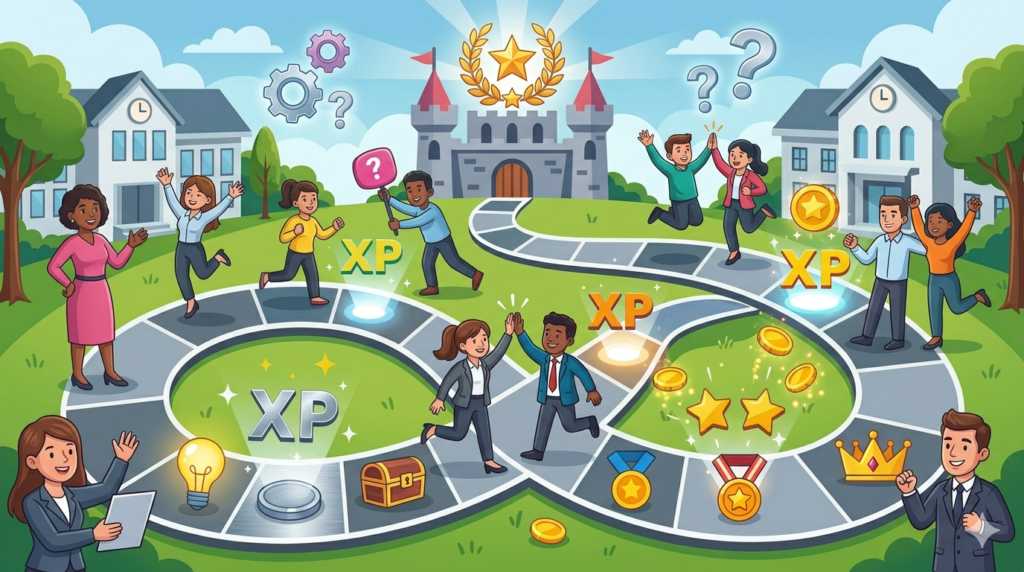
Let’s be honest for a second—traditional learning has a boredom problem. Long lectures, endless slides, zero interaction… it’s giving sleep mode. In a world where people binge-watch entire seasons in one night and grind levels in games for hours, expecting learners to stay engaged with dull content is unrealistic.
That’s where gamification in learning comes in. It’s not about turning education into a video game—it’s about borrowing what games do right and using it to boost motivation, engagement, and knowledge retention.
In this blog, we’ll break down what gamification is, why it works, and how it’s transforming modern education and corporate training—without the fluff.
What Is Gamification in Learning?
Gamification is the use of game-like elements—such as points, badges, levels, challenges, and leaderboards—in non-game environments like education and training.
In learning, gamification aims to:
-
Increase engagement
-
Encourage participation
-
Improve knowledge retention
-
Make learning feel rewarding, not exhausting
Instead of forcing learners through content, gamification pulls them in. Big difference.
Why Traditional Learning No Longer Works
The modern learner has changed—but most learning systems haven’t.
The Core Problems:
-
Short attention spans
-
Passive learning formats
-
Lack of motivation
-
One-size-fits-all content
-
No instant feedback
People don’t quit courses because they’re lazy. They quit because the experience is dry, overwhelming, or irrelevant. Gamification fixes this by making learners want to continue.
The Psychology Behind Gamification
Gamification works because it taps directly into human psychology. Games are addictive for a reason—and learning can use the same mechanics ethically.
Key Psychological Drivers:
-
Dopamine release from achievements
-
Progress tracking through levels
-
Competition via leaderboards
-
Mastery through challenges
-
Autonomy in choosing paths
When learners feel progress, recognition, and control, they stay engaged longer—and learn better.
Benefits of Gamification in Learning
Let’s talk results. Because vibes alone don’t cut it.
1. Increased Learner Engagement
Gamified courses feel interactive, not forced. Learners actively participate instead of passively consuming content.
2. Better Knowledge Retention
Breaking content into challenges, quizzes, and mini-missions improves long-term memory and recall.
3. Higher Course Completion Rates
People are far more likely to finish a course when there are rewards, progress bars, and milestones involved.
4. Immediate Feedback
Instant feedback helps learners correct mistakes in real time, reinforcing correct behavior.
5. Motivation Without Pressure
Gamification creates motivation through rewards—not fear of failure.
Common Gamification Elements Used in Learning
You don’t need a full-blown RPG to gamify learning. Small elements go a long way.
Popular Gamification Features:
-
Points & Scores – Reward participation and success
-
Badges & Certificates – Visual recognition of achievement
-
Levels & Progress Bars – Clear sense of advancement
-
Leaderboards – Friendly competition
-
Challenges & Quests – Goal-oriented learning
-
Unlockable Content – Curiosity-driven progress
When done right, these elements enhance learning—not distract from it.
Gamification in Corporate Training
Corporate training is where gamification really shines.
Why Companies Are Embracing It:
-
Employees are more engaged
-
Faster onboarding
-
Better compliance training outcomes
-
Improved skill development
-
Higher training ROI
Sales teams compete on leaderboards. Customer support teams earn badges for performance. Compliance training becomes interactive instead of painful. Everybody wins.
Gamification in Online Education & eLearning
Online learning often struggles with drop-offs and low engagement. Gamification flips the script.
How Gamification Improves eLearning:
-
Turns lessons into interactive experiences
-
Encourages self-paced learning
-
Reduces cognitive overload
-
Keeps learners coming back
Platforms using gamification consistently report higher engagement and completion rates. Facts are facts.
Gamification vs Game-Based Learning: Know the Difference
Quick clarity check—these two often get confused.
-
Gamification: Adding game elements to learning
-
Game-Based Learning: Learning through actual games
Both are powerful, but gamification is easier to implement and works across almost all subjects and industries.
How to Implement Gamification in Learning (The Smart Way)
Here’s the hot take: bad gamification is worse than no gamification.
Best Practices:
-
Align game mechanics with learning objectives
-
Keep it simple—don’t overload features
-
Reward progress, not just perfection
-
Make challenges meaningful
-
Use data to improve the experience
Gamification should support learning goals—not overshadow them.
Tools and Platforms That Support Gamification
Modern Learning Management Systems (LMS) make gamification easier than ever.
Features to Look For in an LMS:
-
Built-in badges and points
-
Quiz-based challenges
-
Progress tracking
-
Leaderboards
-
Analytics and learner insights
A modern LMS is basically the control center for effective gamified learning.
Challenges of Gamification (And How to Avoid Them)
Yes, gamification isn’t magic. It needs strategy.
Common Pitfalls:
-
Overemphasis on competition
-
Rewards without real learning value
-
Poorly designed challenges
-
Ignoring learner diversity
The Fix:
Balance motivation with meaning. Keep learning at the center.
The Future of Gamification in Learning
Gamification is no longer a trend—it’s becoming a standard.
What’s Next:
-
AI-driven personalized challenges
-
Adaptive gamified learning paths
-
Social and collaborative gamification
-
AR and VR-enhanced learning experiences
The future of learning is interactive, personalized, and—finally—enjoyable.
Final Thoughts: Learning Shouldn’t Be Boring
Gamification proves one powerful truth: people learn better when they’re engaged, motivated, and having fun.
Whether it’s schools, universities, online courses, or corporate training—gamification brings learning back to life. It transforms learners from passive observers into active participants.
Education doesn’t need to be dull to be effective. In fact, the more fun it is, the better it works.
And honestly? It’s about time we stopped pretending otherwise.